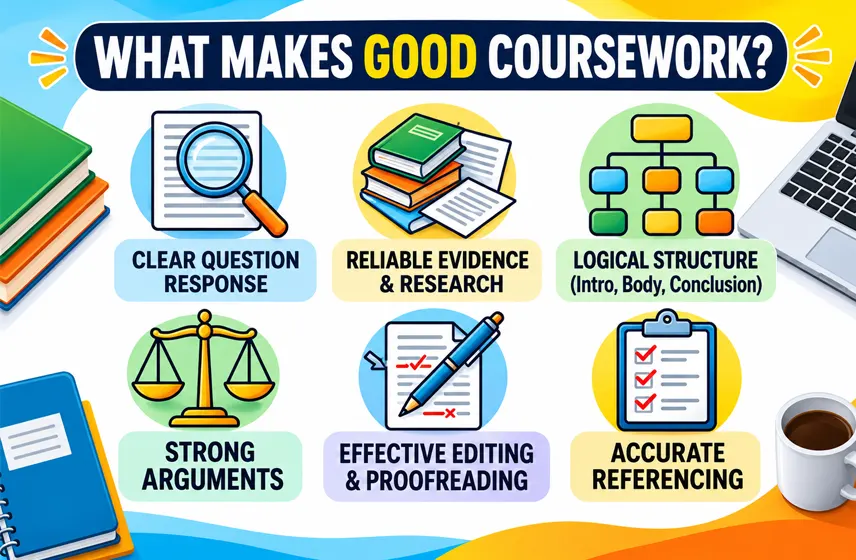
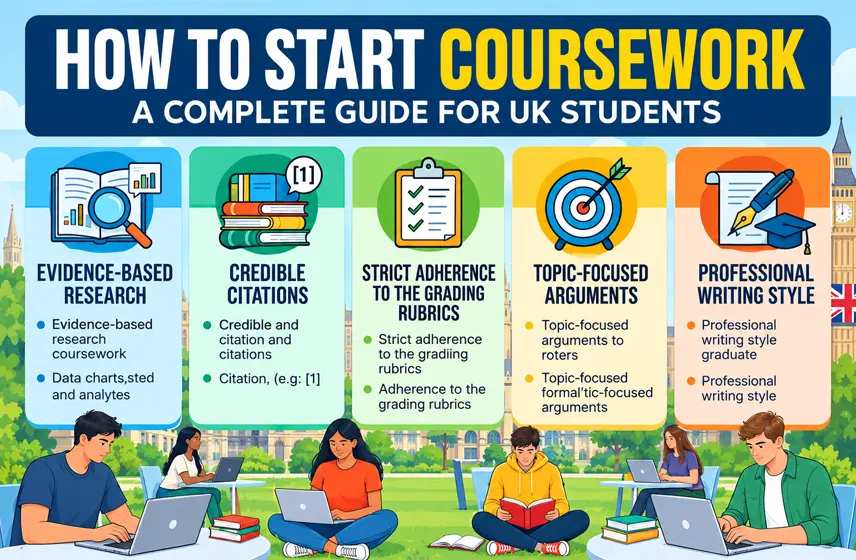
Good coursework isn't about using a lot of vocabulary. It is about answering the question clearly, using reliable sources, writing strong arguments, and following the referencing style in the assignment guidelines.
Quality coursework also requires a clear coursework structure: an introduction, main body, and a convincing conclusion. Your introduction should be able to introduce what your assignment is about, your main body should have structured paragraphs based on well-supported ideas, and the conclusion should tie key ideas together.
This simple guide explores practical coursework-writing tips to help you understand and write strong coursework by improving academic writing skills, research, and referencing.
What is Good Coursework?
Writing good coursework means academically sound writing and strong research that is relevant to the main assignment question. By the end of your writing, the readers should make out that you’ve understood the topic really well.
The following key aspects form the basis of good-quality coursework:
- Strong/clear response to the assignment question
- Use of credible evidence
- Logical paragraph structure
- Focused claims
- Critical analysis
- Formal writing tone
- Accurate referencing
- A conclusion answering the central idea
- Editing and proofreading
So basically, good coursework has a clear purpose where every section or paragraph contributes toward answering the main assignment question. For instance, if a paragraph contains informative ideas but it doesn't resonate with your main arguments, you must rethink it.
Understanding the Assignment Question:
One of the most useful writing tips for UK-based university and college assignments is first understanding the assignment’s question thoroughly before starting your research or drafting the introduction.
Reading the assignment brief carefully is a skill that most students lack. They just rush to answer it directly instead of evaluating its meaning. Without paying attention to the main question, you may overlook the important action verbs that give your assignment a clear direction.
These words are also called command words, which simply instruct you to take an action.
Here are some common command words used in almost every assignment that you must understand before writing anything:
| Command Words | Meaning |
|---|---|
| Analyze | It means to break an idea into parts and examine how they are interrelated |
| Evaluate | It involves considering strengths, weaknesses, and the overall value of an idea. |
| Compare | It simply asks you to identify key differences or similarities within an idea |
| Discuss | It prompts you to explore different perspectives before concluding. |
Other important things to check include:
- Learning outcomes
- Word count
- Submission date
- Grading rubrics
Planning Your Assignment Logically:
Writing becomes easier when you implement proper planning. First, research the topic back and forth to identify the main concepts or ideas you will be discussing.
Proper planning includes:
- Doing background research on your main topic by reading or exploring different sources such as textbooks, PDFs, journal articles, and scientific theories (if required).
- Creating a clean outline, which means dividing your entire assignment into parts such as introduction, abstract, or literature review.
- Set specific deadlines for each task rather than doing everything in one sitting, as it leaves you enough time to edit and proofread later.
- Organize all of your notes or research material according to the author’s name, publication date, genre, and title to make writing hassle-free.
Build a Clear Assignment Structure:
A clear assignment structure helps your examiner understand your argument and also makes it easier for you to organise your ideas.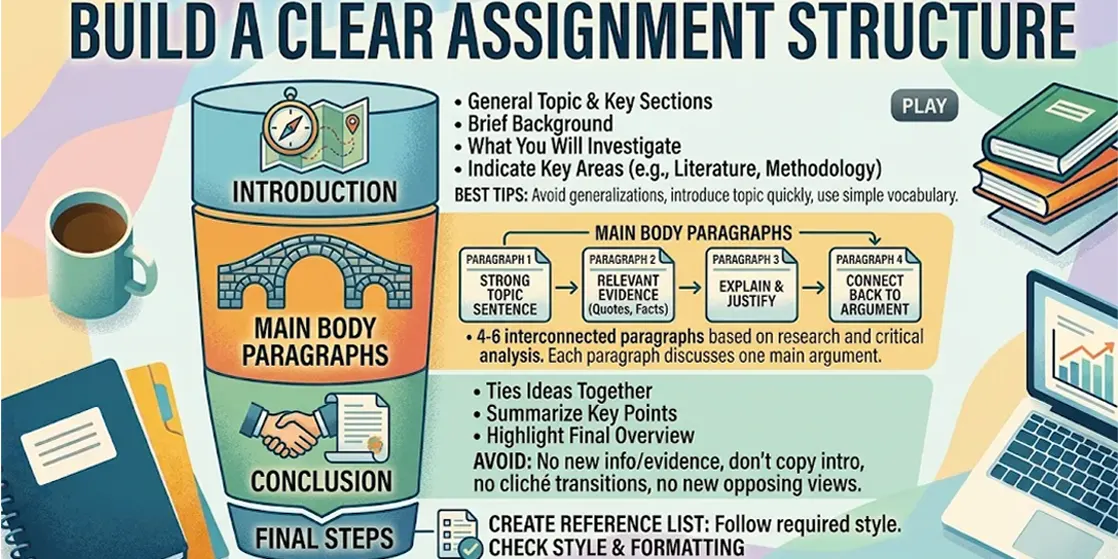
Introduction:
You must have a general idea of the introduction. It introduces the main topic and explains what you will investigate. It also briefly discusses the background information to help the reader understand the discussion without becoming too detailed. Alternatively, you can also briefly indicate the main areas, such as the literature review or methodology, that your assignment will cover.
Here are the best tips for writing a catchy introduction:
- Avoid starting with unnecessary general statements.
- Introduce the main topic quickly and highlight its key sections.
- Use simple vocabulary instead of fancy or complicated jargon.
Main Body Paragraphs:
It contains 4 to 6 paragraphs (depending on your word count) that are based on your research, main arguments, and critical analysis. Each paragraph discusses one main argument that is connected to the assignment question.
Follow this pattern for a well-informed body paragraph:
- Begin with a strong sentence
- Support it with relevant evidence such as quotes, examples, facts, or statistics
- Explain the evidence and also justify how it supports your argument
- Connect it back to your overall argument
Remember that all paragraphs should be connected and not have unrelated facts.
Conclusion:
The purpose of the conclusion is to remind readers how all your ideas are connected, summarize the most important points, and also highlight your final overview of the assignment.
What to avoid in your conclusion:
- Don’t introduce new information, facts, or ideas, as it can confuse the readers
- Avoid using new evidence
- Don’t copy your introduction
- Don’t use cliché transition words like “to sum up”
- Don’t introduce a new opposing view
Finally, create a reference list that includes the sources you have cited, following the referencing style required by your university or college.
Use Strong Research and Evidence:
Strong research is the building block of an assignment. In the days of digital facilities, students can find ample sources, digital libraries, and multidisciplinary databases for research.
This is a list of some of the best sources to find peer-reviewed research material:
- JSTOR
- Google Scholar
- Core
- Europe PMC
- EconLit
- British Library
- OAPEN Library
When working with a research finding, don’t use it just because it ranked at the top of your Google search results. You must also consider who produced it, when it was published, what evidence it uses, and whether it is relevant to your question.
Develop Strong Academic Arguments:
A common difference between an average and good assignment is the level of analysis. Description tells the reader what something is. In contrast, analysis explores why it matters, how it works, and what the evidence suggests.
For example:
Descriptive: Remote working can improve flexibility for employees.
Analytical: Although remote working can improve employee flexibility, its effect on productivity may depend on job type, management practices, and access to digital devices.
The reason why you should go with the second option is that it provides more space for debate and evaluation.
For developing strong arguments, follow these starters:
- Compare different views on the same theory to create a balance
- Examine explanations and include your unbiased judgement
- Keep your sentences direct, focused, and precise
- Use linking words like “furthermore” or “moreover” only when there is an actual need to connect statements
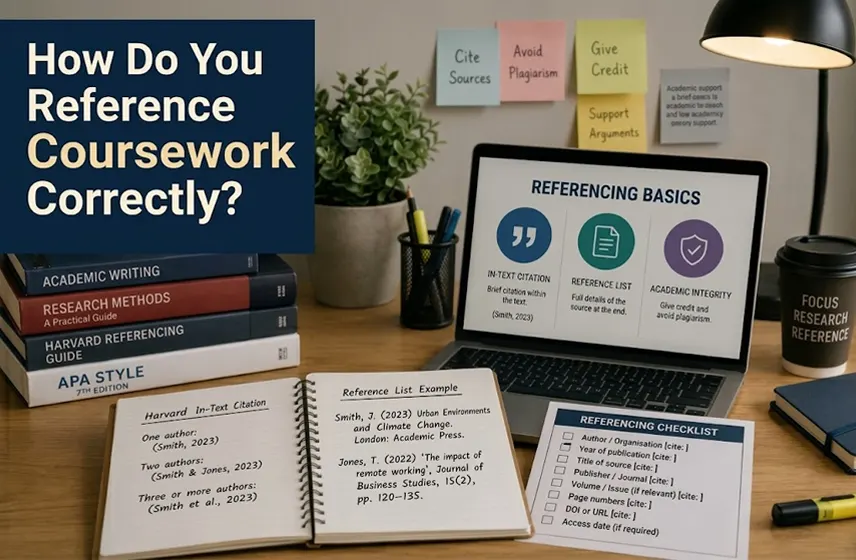
Follow Correct Referencing Style:
Before getting into the application of referencing style, first understand its purpose.
Assignments in universities and colleges in the UK require students to strictly follow referencing style to give proper acknowledgement to the authors and prove your writing is credible and has depth.
Key Purposes of Referencing:
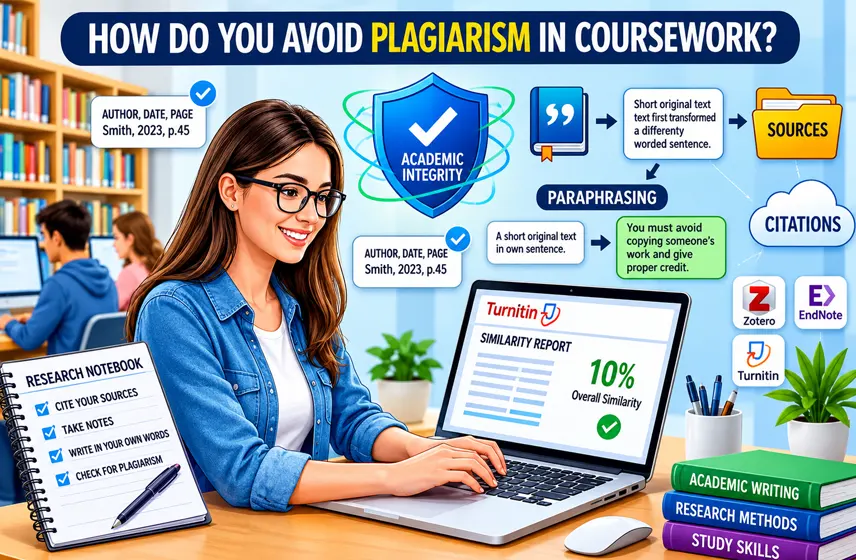
- It prevents academic misconduct, such as plagiarism, when you cite sources clearly.
- It provides your work with academic credibility when using authoritative evidence.
- It allows the readers to verify your sources.
- It helps you earn higher marks as you follow the UK’s official grading criteria and requirements for a consistent referencing format.
Types of Referencing Styles in the UK:
In the UK, several different types of referencing systems are used depending on the requirements of a specific academic field of study and department:
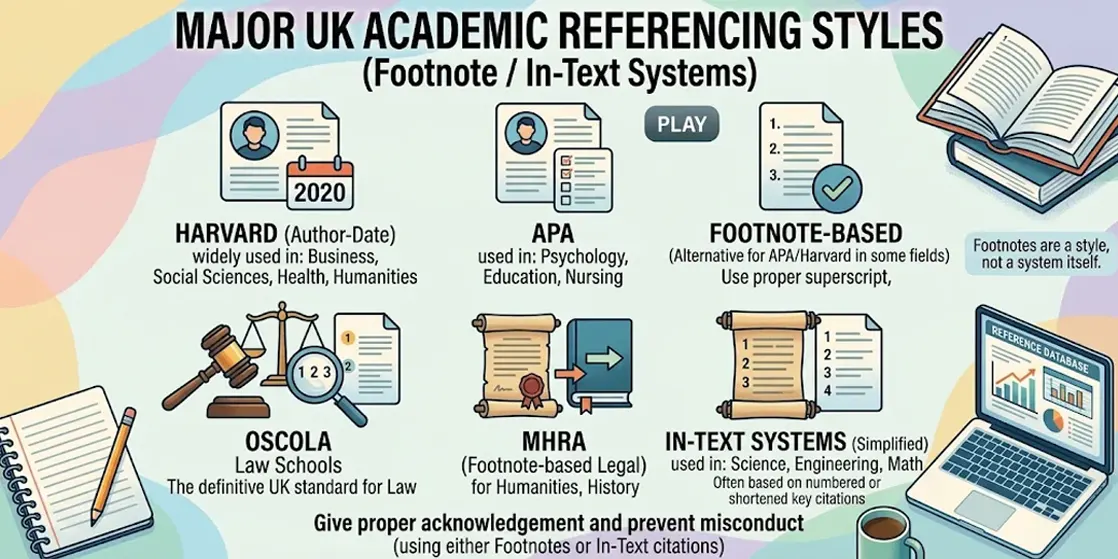
- Harvard: One of the most widely used referencing styles in the UK’s academic setting. It’s an author-date system (Smith, 2023) which is used in fields such as business, social sciences, health sciences, and humanities.
- APA (American Psychological Association): Similar to Harvard, it uses the same author-date format but has stricter formatting rules for subjects like psychology, education, and nursing.
- OSCOLA (Oxford Standard for the Citation of Legal Authorities): It is a footnote-based referencing style that is primarily used across law schools in the UK. Students are expected to cite sources using superscript numbers linked to footnotes at the page’s bottom.
- MHRA (Modern Humanities Research Association): It is a footnote or endnote style often paired with a bibliography used in fields of humanities and history.
Remember that referencing is the technical part of assignment writing, so in-text citations or adding footnotes should be used carefully. Don’t leave it until the last minute, as there are more chances of making small errors, which can make you lose significant marks.
Proofread and Edit Your Work:
Assignment writing doesn't end with finishing the first draft. There must be enough time left to review your writing page by page to catch minor grammatical mistakes, font errors, or typos.
Here is how to proofread and edit your documents:
- Run it through spell checkers like Grammarly to catch obvious punctuation, spelling, or grammar mistakes.
- Read aloud to catch senseless phrases or unclear sentences.
- Ask a friend or family member to read your work to get a second perspective.
Final Checklist for Quality Coursework:
Before submitting your documents, ensure you’ve covered the following:
| Answered the assignment question directly | ✓ |
| Used relevant/current academic research | ✓ |
| Followed a clear outline and structure | ✓ |
| Developed well-supported arguments | ✓ |
| Cited your references correctly | ✓ |





 +44 7933 142807
 info@writemycoursework.co.uk

